How do you use AI in remote, distributed, and multicultural product teams?
Many people are wondering how AI changes teams and ways of working. This is especially relevant for remote, distributed, and multicultural product teams.
When Clarity Comes At The Cost of Nuance
AI normalizes tone, flattens nuance, introduces various biases, and smooths out differences in pursuit of clarity and structure. Language barriers are reduced. But in multicultural product teams, nuance matters deeply. Cultures differ in how they express disagreement, how directly they give feedback, how they relate to authority, and how comfortable they are with conflict. Silence can mean reflection in one context and resistance in another. And as Erin Meyer reminds us in The Culture Map, individual differences layer on top of cultural ones in ways that are equally easy to misread.
What AI Can’t Read In The Room (or Online)
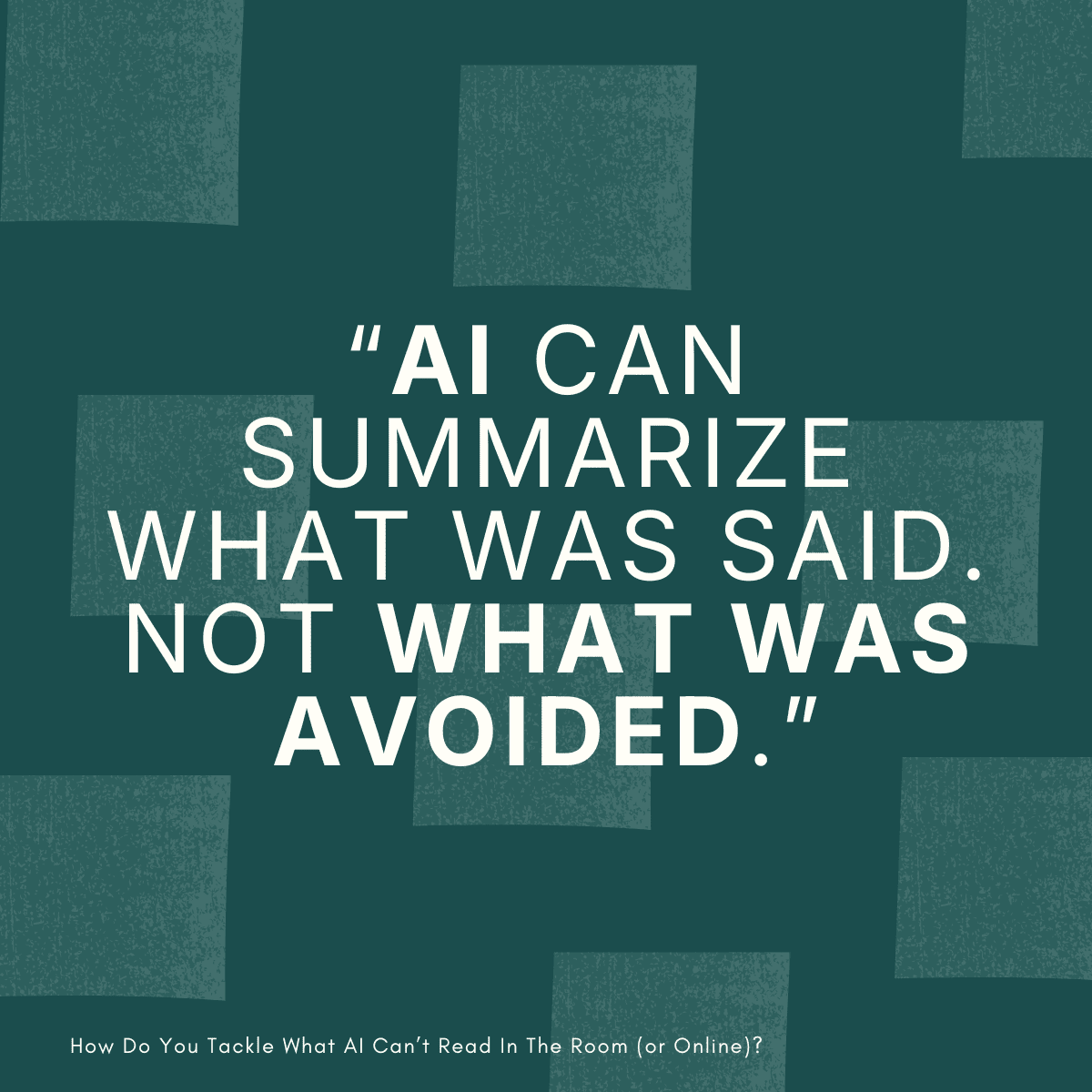
AI doesn’t understand those dynamics. It can summarize what was said, but not what was avoided. It can polish a message, but not judge whether the team is aligned in meaning. It can draft a retrospective, but not sense whether people feel psychologically safe enough to be honest. You can’t trust AI the same way you trust people.
AI may even amplify cultural misreads if teams aren’t intentional. With AI, teams may become smaller in size. But algorithmic and cultural biases in AI do little to help people collaborate under uncertainty, especially in multicultural environments.
Process Versus Sense-Making
If anything, the rise of AI sharpens a distinction that was always there: the difference between process and sense-making. As procedural aspects of teamwork become faster and easier to automate, human interaction becomes more visible and valuable. Facilitating difficult conversations, surfacing implicit tensions, building trust across cultures, helping teams navigate uncertainty: these don’t delegate easily to an agent.
For those who built their professional identity around maintaining process, AI may feel threatening. For those whose work is about enabling collaboration and developing capability, it’s more of a shift than a replacement. I’ve experienced this in practice in my work assignments.
The Differentiators That Remain
The differentiators become cultural intelligence, trust, facilitation, coaching leadership, strategic curiosity, and sense-making. That’s where deliberate attention belongs: protecting cross-cultural connection and trust, designing remote-friendly and human-centered ways of working, and building teams with AI-augmented delivery capabilities.
AI is forcing us to rediscover the human core of effective distributed and multicultural teamwork. And that still requires us.
This isn’t a piece about AI technology. It’s a reflection on teamwork, culture, and what remains irreducibly human. It’s based on my own experience working with distributed multicultural teams.
Agree, disagree, or something in between? What’s your experience?